
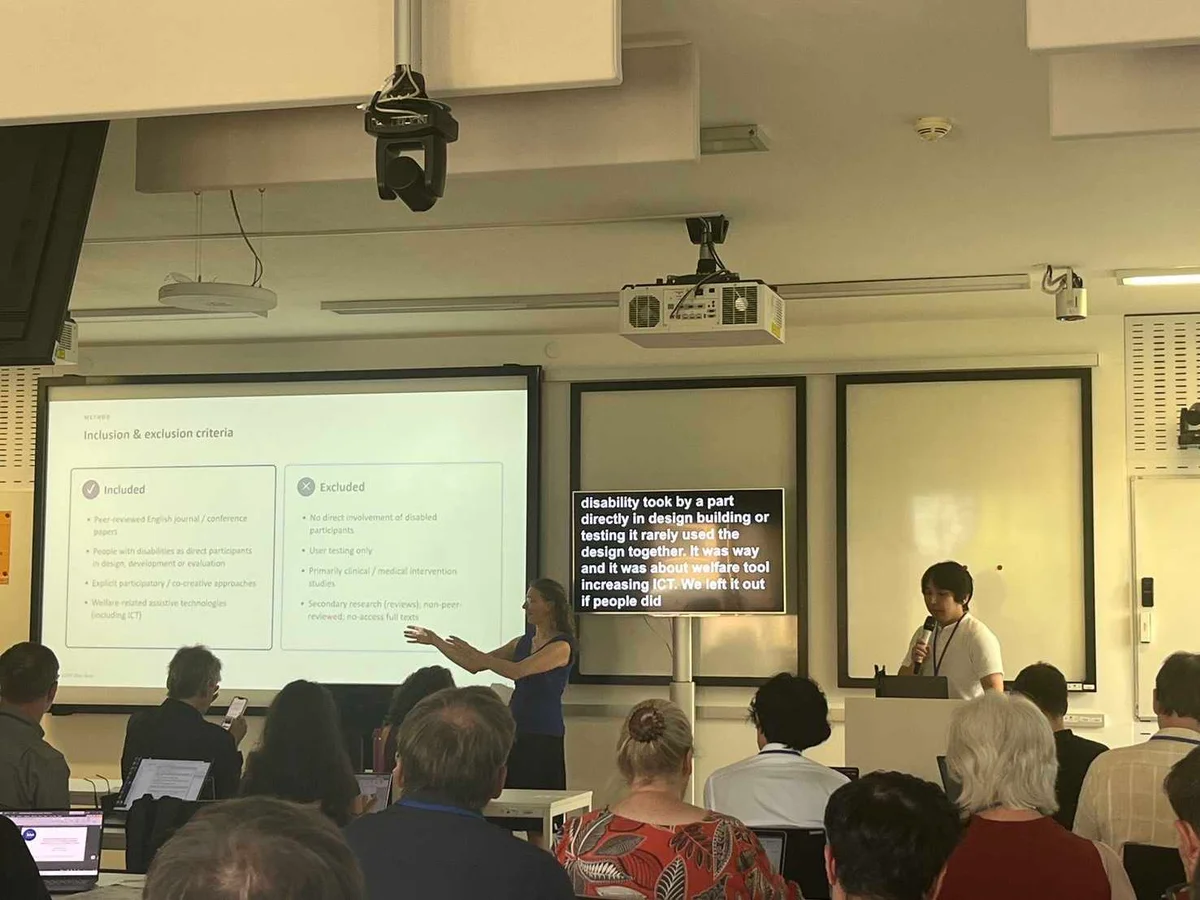
From July 15 to 17, 2026, Moro Seiya, a doctoral student in our lab, presented two studies at the 20th International Conference on Computers Helping People with Special Needs (ICCHP 2026), held at Masaryk University in Brno, Czech Republic. Both papers were peer-reviewed and published in the Springer proceedings (Lecture Notes in Computer Science).
About ICCHP 2026
ICCHP is an international conference on digital inclusion, assistive technology (AT), and accessible ICT for people with disabilities. Its 20th edition brought researchers and practitioners together at the Faculty of Arts, Masaryk University.
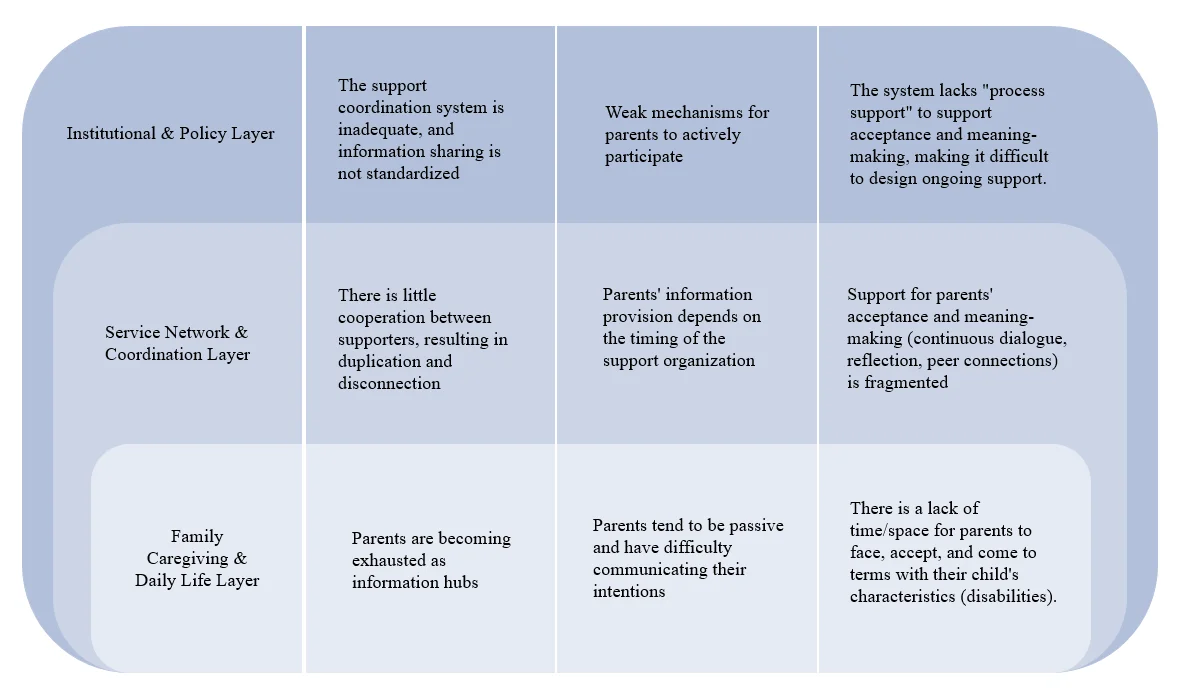
Paper 1: Eliciting Design Knowledge for Care Coordination from Eco-Maps
An eco-map is a diagram that visualizes, on a single page, the relationships among an individual, their family, caregivers, and community resources, making it possible to identify areas of isolation and aspects of support that need strengthening. Through a single-case study, this research examined a method for eliciting design knowledge for care coordination by comparing eco-maps drawn by multiple care professionals with those drawn by a parent mentor — a parent who receives support while also providing support to other families. The issues identified through this comparison were then used to define the requirements for a support application and to inform a preliminary evaluation of its prototype.
Paper 2: How and When People with Disabilities Participate in Design
Involving people with disabilities in design has long been advocated in assistive technology and ICT development. Through a scoping review, this study mapped at which phases of the design process, and in what forms, people with disabilities actually participate, showing where participation is established and where it remains thin.
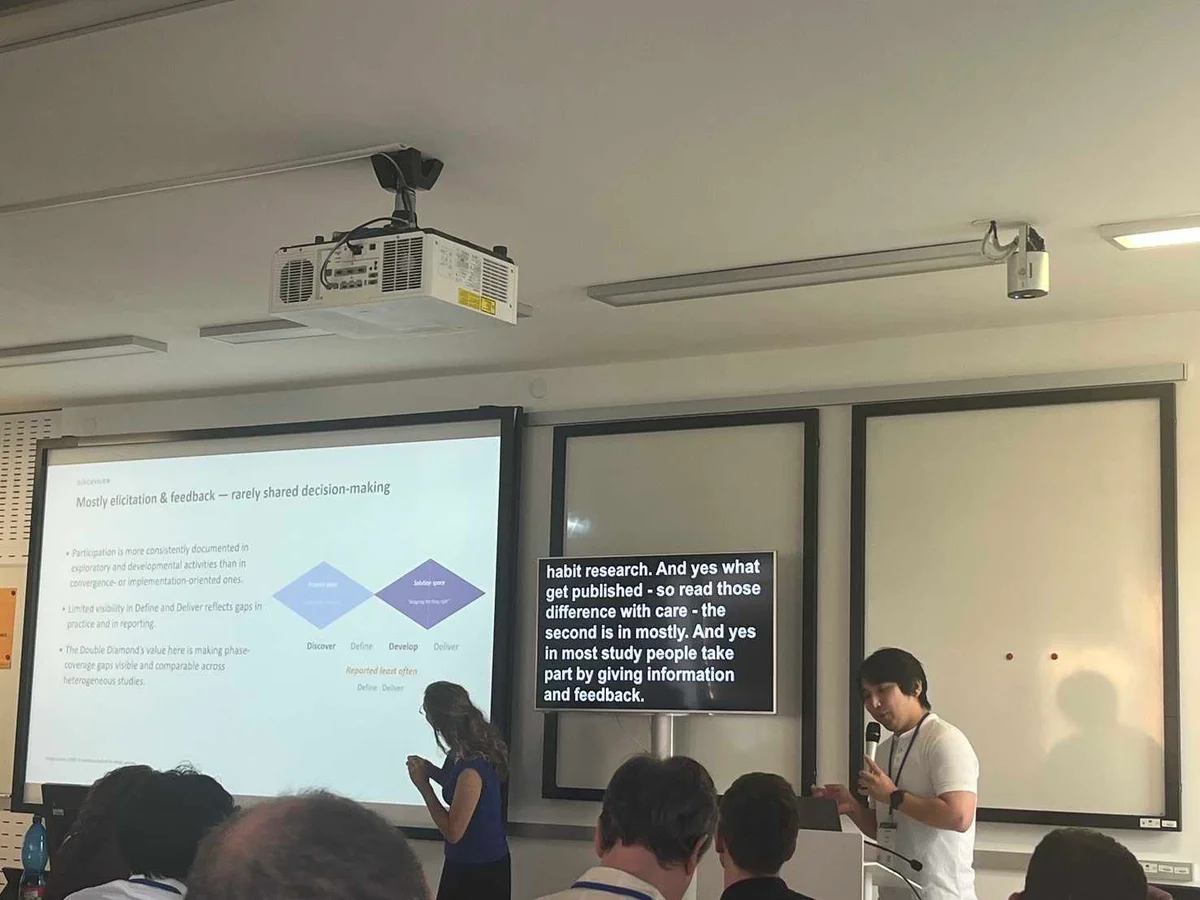
At the conference, discussion centered on methodology, including why eco-maps were chosen and how the review databases were selected. Moro also exchanged views with researchers in special education and psychology, opening new connections for his doctoral research.
Publications
- Moro, S., Osaki, Y., Takagi, S., & Ohashi, T. (2026). Eliciting Design Knowledge for Care Coordination Through Multi-Actor Eco-Map Comparison: A Single-Case Methodological Study. In: Miesenberger, K., Petrie, H., & Peňáz, P. (eds.), Computers Helping People with Special Needs: 20th International Conference, ICCHP 2026, Brno, Czech Republic, July 15–17, 2026. Lecture Notes in Computer Science, Springer, Cham, pp. 208–215. https://doi.org/10.1007/978-3-032-31308-9_25
- Moro, S., Kobashi, M., Takagi, S., & Ohashi, T. (2026). How and When People with Disabilities Participate Across Design Phases in Assistive Technology and ICT. In: Miesenberger, K., Petrie, H., & Peňáz, P. (eds.), Computers Helping People with Special Needs: 20th International Conference, ICCHP 2026, Brno, Czech Republic, July 15–17, 2026. Lecture Notes in Computer Science, Springer, Cham, pp. 530–537. https://doi.org/10.1007/978-3-032-31308-9_63