
On April 27, 2026, Dempa Shimbun's ongoing series The Future of Semiconductor Talent (Episode 28) featured "Transition Design Studio," a project-based learning (PBL) program designed and operated by Ohashi Lab.
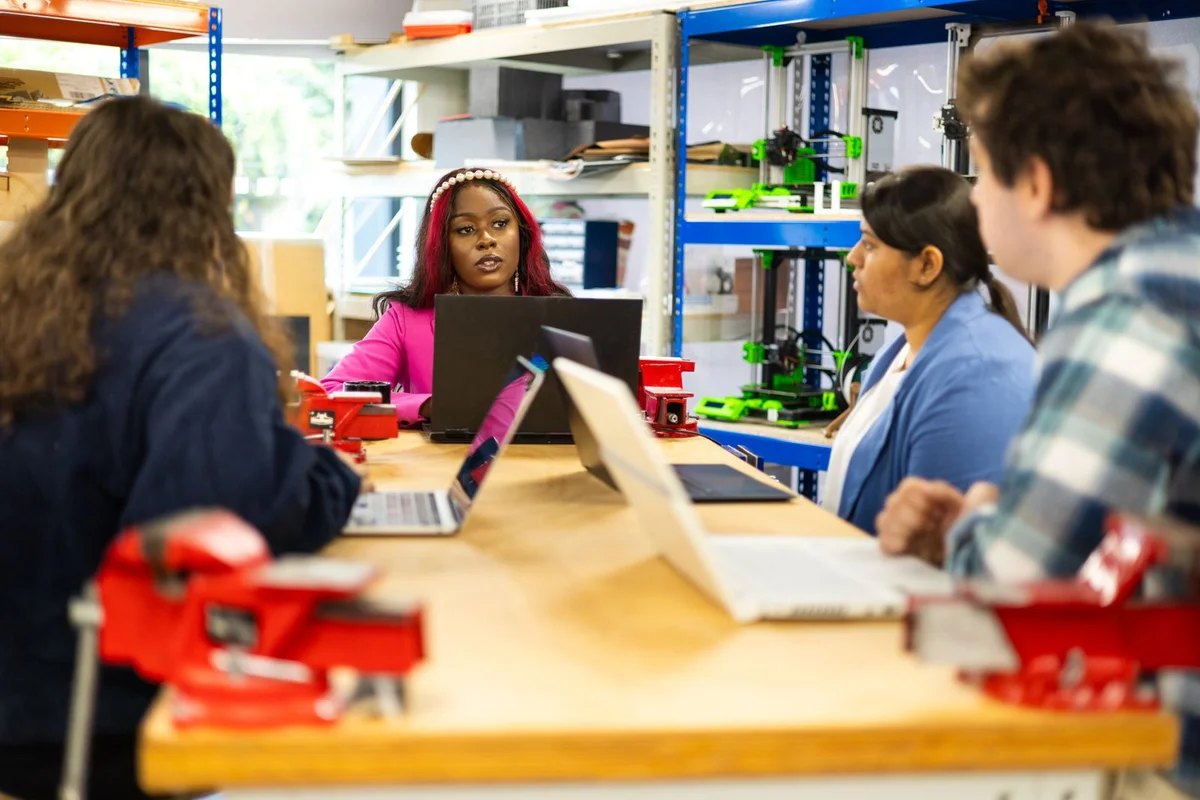
Titled "Designing Semiconductors from a 'Preferable Future' — Institute of Science Tokyo Cultivates the Next Generation of Talent," the article reports on student deliverables from a forum & workshop held in late February 2026 in Nihonbashi, Tokyo. It introduces how Transition Design — long central to the lab's research — has been collaboratively applied by lab members to semiconductor talent development.
A PBL that connects Transition Design to semiconductor design
"Transition Design Studio" is a PBL that takes students all the way from a societal issue through to a System-on-Chip (SoC) architecture. Ohashi Lab members worked together to extend the lab's transition-design methodology — previously practiced on sustainability, disaster mitigation, and care — into the new domain of semiconductors as foundational technology. It is an educational application of the lab's research.
Working on the theme of issues in depopulated regions, students moved through six steps with lab members serving as facilitators:
- Transition Design — structuring social issues as Wicked Problems
- Futures inquiry — designing preferable-future visions and scenarios
- Fieldwork — understanding the everyday context of those affected
- Ideation — divergent solution exploration through co-creation workshops
- SoC design — translating solutions into semiconductor architectures
- PoC planning — designing field experiments to validate
The program is structured so that students themselves experience the orchestration between Transition Design's long-horizon systemic change and the concrete hardware specifications of semiconductor design. Doctoral, master's, and undergraduate members of the lab each contribute facilitation and design support from their respective specializations, making the program a lab-wide educational practice.
Implementation context
The PBL was carried out under the auspices of SiCA (Semiconductor Innovation and Co-creation Arena), a semiconductor talent-development hub operated by Institute of Science Tokyo. Through Associate Prof. Ohashi Takumi — the lab's principal investigator — serving concurrently as SiCA's project lead, Ohashi Lab deploys its PBL methodology within the co-creation arena that brings together frontrunners from industry, government, academia, and civil society.
Closing
Transition Design is, at its core, a long-horizon design approach to systemic societal change. This coverage in Dempa Shimbun demonstrates that the methodology can also design the interfaces between talent development and societal implementation within the foundational technology domain of semiconductors. The lab will continue developing — collaboratively across its members — both research and educational practice centered on designing those interfaces between technology and society.